


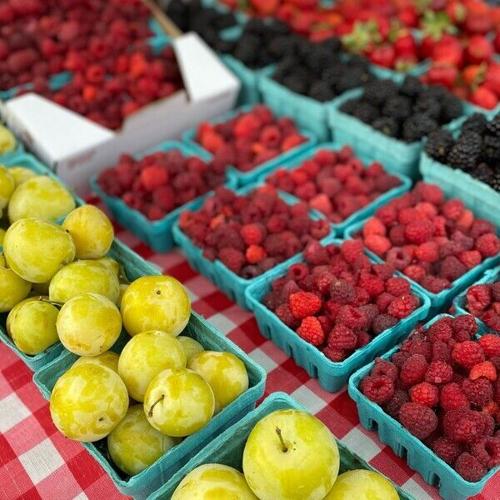
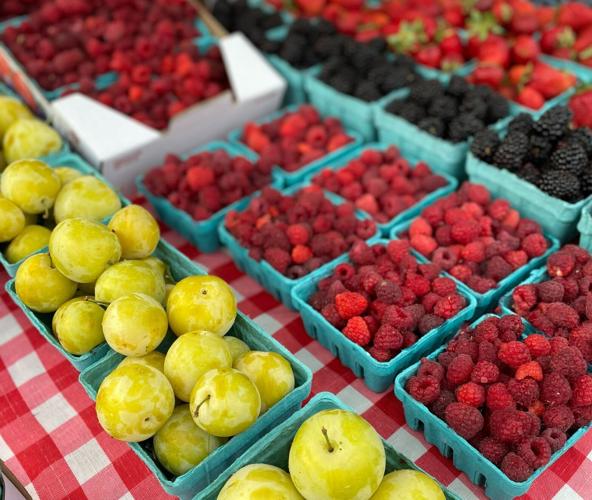
With just a nine-block walk, student workers at Oregon State University’s Basic Needs Center are helping introduce fellow students to all the fresh fruit, sense of community and prime dog-watching the Corvallis farmers market has to offer.
The next market tour is Wednesday morning, Aug. 12, starting from the BNC at Champinefu Lodge on Madison Avenue at 10:30 a.m.
The BNC’s market tours started in summer 2025, with peer navigators leading small groups of students to the Corvallis waterfront to explore and learn how to get the most out of the farmers market. This summer the BNC is leading eight visits total.
“It’s really important to us at the BNC to make fresh produce part of the everyday habits and patterns of life for students,” said Emily Faltesek, a registered dietitian-nutritionist and the BNC’s food security programs manager. “In every survey we do about food, students tell us about how their health is a priority and accessing those fresh fruits and vegetables is so important to them.”
People are also reading…
In September, the BNC will transition the program to the Health Promotion team in Student Health and Wellbeing for peer health educators to lead a few more tours.
“In Student Affairs, we love collaborations between departments. We’re excited to find these ways to show that everyone can support basic-needs work and help students form those basic-needs skills, and ways our programs can work together,” Faltesek said.
The summer tours are led by peer navigators, student workers at the BNC who have received services from the center themselves and understand the basic-needs challenges other students might be facing.
They teach students how to use market tokens, with a focus on how SNAP’s Double Up Food Bucks program in Oregon means farmers markets will match up to $20 of SNAP-EBT dollars with market tokens so participants receive an additional $20 to spend on fresh produce.
The tours also help break down the unfamiliarity and anxiety students may feel about visiting the market for the first time, Faltesek said. The tours go on Wednesdays when the market is smaller and less crowded, and peer navigators talk with students along the walk to help build community.
“One hesitation students have is that they don’t know how it works. They think they’ll have to have cash, or they think they won’t be able to afford anything. There are different kinds of nervousness about approaching something new,” Faltesek said. “But once they’re there, they find something they recognize, or if not, there are a lot of samples. There are a lot of cute dogs and everyone’s in a really great mood. It’s such an event in our community.”
Market tours are a fun and highly sought-after assignment among the student workers, said Makayla Allen, a peer navigator and fourth-year College of Forestry student.
“The idea of being able to shop, and learning about Double Up Food Bucks where they’re getting additional money, is a really exciting thing for students,” she said. Allen has used the Double Up program in the past and says many students on the tours are familiar with SNAP but unaware of the opportunity for matching dollars at the farmers market.
The BNC also provides a free $15 in tokens to students on their first market tour that they can spend on anything, not just produce.
The market tours are part of the BNC’s Summer Produce Program, which also includes Produce Thursdays, when the center uses money they raised during Dam Proud Day to purchase fresh fruits and vegetables from farmers market partners. The center also partners with a couple of community gardens and sets up a mini market on Thursdays at the Champinefu Lodge for students to pick up fresh produce.
The center also offers samples and recipes to help students learn new ways to use those items.
“I think it’s important to introduce lots of different strategies and skills for folks who are figuring out how they want to live life,” Faltesek said. “Programs like market tours give students more options, they give them a broader worldview and allow them to see their community from a different perspective. They see their role within the community in a warmer way, who their neighbors are and what it’s like to have a community food system that involves buying food from your neighbors.”


