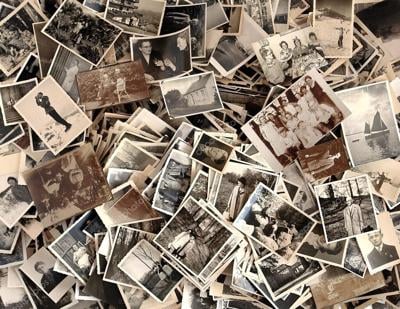


Photo provided by DepositPhotos
Old family prints make an unlikely growth market. Most were never scanned, and plenty have spent decades fading in a closet. Even so, photo restoration is now a $1.8 billion global market, according to a 2025 report from DataIntelo.
Genealogy is a $4.57 billion market, and photo repair is part of it
The global market for genealogy products and services was worth $4.57 billion in 2024, according to Polaris Market Research. The firm’s report lists photo restoration and animation among the AI features now widely used in the field, and it credits growth in the family records segment to more people wanting to preserve their family history.
People are also reading…
Tech outlet eWeek adds a generational detail. In a June roundup of AI photo restoration trends and prompts, it says millennials and Gen X users digitizing old family albums are especially active in recovering damaged childhood photos.
One-tap colorization has moved from the archive studio to the phone
Repair work that once cost a retoucher hours of hand-cloning now takes a generative model seconds, AI Insights News reports. The same piece points to a major consumer photo app adding one-tap colorization for black-and-white shots, so work that used to require an archival studio now happens on a phone.
Polaris’s report backs up the reach of that feature, listing colorization of black-and-white images among the AI tools in wide use across the genealogy market.
At home, families restore first and animate second
The job starts with repairs. Scan the print, then use AI upscaling and sharpening to clear scratches and bring soft faces back into focus. Browser-based suites like StockCake’s AI tools put upscaling and video generation in one place, so the repair and the optional video both start from a real family photograph.
Motion is the optional second pass. A restored still can be fed into an image-to-video tool that adds a slow camera push or a slight turn of the head. A July guide from one AI imaging company recommends short clips with restrained movement, since longer ones tend to wander further from the original face.
The better a restoration looks, the fewer people check it
How much of the finished picture was ever in the original? AI Insights News calls the problem the “trust paradox”: the more convincing the output, the less anyone asks whether it’s accurate. A model fills a scratch or picks a uniform color from learned patterns, with no record of the actual object, so a one-of-a-kind heirloom gets an educated guess. That’s fine for a framed print in the hallway, the outlet says, and a problem for genealogists and archivists who treat a restored image as a historical record.
Motion adds more guesswork. The imaging guide says any blink or smile in an animated portrait is generated by the model, and it recommends captioning the clip as an AI-generated animation. It also advises keeping the original scan untouched and doing all the restoration on a copy.
A major genealogy company bought into AI memory tools in 2025
Polaris’s report records an August 2025 deal in which a major genealogy company acquired a family-memories business, part of a plan to build AI features for preserving and organizing those memories.
The imaging guide points to one way of keeping track of AI edits: Content Credentials, a label built on the C2PA standard that travels with a file and logs where it came from and how it was altered, provided the software involved is compatible. For families, a June contributor article on WHIO recommends a lower-tech version: keep the untouched scan beside the AI-restored copy and write down which edits were made.